Grandpas Are Here to Help: A Designer’s Review
When I first pulled up Grandpas Are Here to Help Grandchildren on my screen, I wasn’t looking for just another cute quote. As a designer who spends half my life digitizing and the other half stitching out test runs, I look for balance. Does the sentiment match the visual weight? Will it hold up under the needle? This design, categorized broadly under Crafts and specifically as a piece of digital Graphics, immediately struck me as a strong contender for heartfelt, personalized projects. It isn’t just about the words; it is about how those words translate into thread and fabric.
First Impressions and Visual Personality
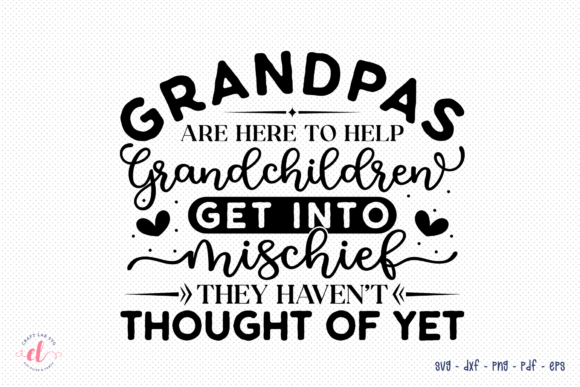
The mood here is warm, nostalgic, and undeniably supportive. The layout suggests a classic typographic approach, likely paired with subtle illustrative elements that evoke family bonding. For an embroidery designer, the first thing I check is the flow. Does the text feel cramped, or does it breathe? In this case, the phrase "Grandpas Are Here to Help Grandchildren" has a natural rhythm. It is long enough to be meaningful but short enough to remain legible if scaled correctly.
I appreciate designs that don’t try too hard. This one feels authentic. It doesn’t scream for attention with overly complex shading or impossible gradients. Instead, it relies on clean lines and clear messaging. This simplicity is crucial when we move from the digital screen to the physical hoop. Complex Graphics often fail in translation, losing detail in the stitch conversion process. A design like this, with its clear thematic focus, tends to survive the transition to a machine embroidery design with its integrity intact.
Real-World Application: The Sweatshirt Test
To truly evaluate a design, I have to imagine it on a real product. Let’s say a client comes to my small shop wanting a custom gift for Father’s Day. They want something durable, wearable, and sentimental. I picture this design centered on the chest of a heather gray crewneck sweatshirt. This is a classic sweatshirt embroidery scenario.
On a textured fabric like fleece or cotton blend, the design needs to stand out without sinking into the nap. If the digitizing uses a solid fill stitch for any background elements, it might pull the fabric. However, if the design relies primarily on clean lettering with perhaps a light running stitch outline or a simple icon, it will sit beautifully on the surface. I can see this working equally well on a canvas tote bag design, where the sturdy fabric provides a perfect foundation for crisp stitching. The versatility mentioned in the product description—suitable for t-shirts, mugs, and signs—translates well to embroidery because the core asset is likely a vector-based SVG. This means I can scale it up for a blanket or down for a pocket patch without losing resolution.
Navigating Technical Challenges
While the sentiment is universal, the execution requires care. Not every surface is friendly to every embroidery file. Here is where my experience as a reviewer kicks in. If you plan to use this on a curved surface, like a baseball cap, you must be wary of distortion. Long phrases can warp when stitched on a small, curved hoop size. I would recommend testing a smaller version first, perhaps focusing on just the word "Grandpa" or a simplified icon if the full quote feels too crowded.
Another critical factor is stitch density. If the design includes heavy blocks of color, it can become stiff and uncomfortable, especially on baby embroidery items like onesies or burp cloths. Babies have sensitive skin, and a dense patch of thread can cause irritation. For these delicate projects, I would advise using a lighter weight thread and ensuring the digitizer has optimized the underlay stitches to prevent puckering. Always use a appropriate stabilizer; for stretchy fabrics, a cut-away stabilizer is non-negotiable to maintain shape after washing.
Dark fabrics present another challenge. If you are stitching this onto a navy or black garment, you need high-contrast thread colors. White, cream, or bright yellow threads will pop, but you must ensure the design doesn’t rely on subtle shading that gets lost in the dark background. I always run a black-and-white mockup before threading up the machine. If the design disappears in grayscale, it will likely lack impact in real life.
Commercial Viability for Etsy Sellers
For the Etsy seller or craft business owner, this design is a potential bestseller. Father’s Day, birthdays, and "just because" gifts drive significant traffic. The phrase taps into a specific emotional niche: the supportive grandfather. This isn’t just a generic dad gift; it’s specific. Specificity sells.
However, professionalism is key. Customers judge the quality of your handmade product by the clarity of the stitch. If the letters are jagged or the spacing is uneven, trust erodes quickly. Before listing this as a custom apparel item or a ready-to-ship personalized gift, stitch it out on scrap fabric. Check the tension. Look for bird’s nests on the back. A clean back means a professional front. This attention to detail builds customer trust and encourages repeat business.
Furthermore, consider the licensing. The product description mentions it is suitable for many purposes, but as a responsible creative entrepreneur, you must confirm whether the license allows for commercial use of the finished embroidered items. Most digital design assets sold as SVGs allow for physical end-products, but rarely allow for the resale of the digital file itself. Always read the terms. If you are unsure, contact the creator. Protecting your small shop product line from legal issues is just as important as the stitching itself.
Final Verdict and Practical Tips
Grandpas Are Here to Help Grandchildren is a solid addition to any designer’s library. It is versatile, emotionally resonant, and technically manageable if approached with care. It fits seamlessly into the world of holiday embroidery and everyday commercial embroidery projects.
- Test First: Always stitch a sample on the actual fabric type you intend to use.
- Check Contrast: Ensure your thread colors stand out against the fabric background.
- Mind the Scale: Adjust the size based on the hoop size and the item’s curvature.
- Stabilize Properly: Use the right stabilizer for the fabric weight and stretch.
- Verify License: Confirm commercial rights before selling finished goods.
In the end, this design works because it tells a story. It transforms a simple piece of cloth into a keepsake. Whether you are creating an embroidered patch for a jacket or a large wall hanging, the success lies in the execution. Treat the design with respect, understand its limitations, and let the quality of your craftsmanship shine through. That is how you turn a digital file into a cherished finished product.