Budha Design: A Practical Embroidery Review
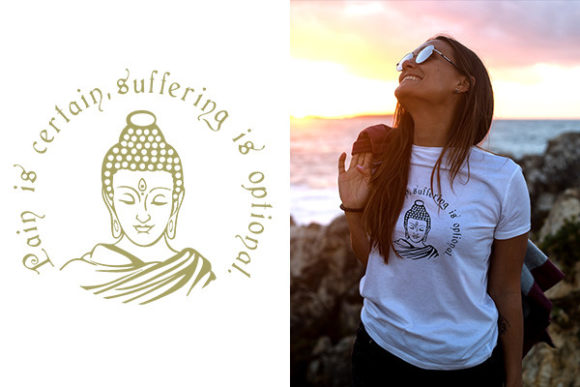
As an experienced designer who has spent countless hours digitizing and stitching out files for clients, I approach every new machine embroidery design with a mix of curiosity and caution. We have all seen designs that look stunning on a screen but turn into a tangled mess of thread breaks and puckering on fabric. Recently, I evaluated Budha Design, a graphic centered around the popular quote "PAIN IS CERTAIN, SUFFERING IS OPTIONAL." This piece falls under the category of Illustrations and Graphics, specifically tailored for Print On Demand and digital use, but its potential for physical embroidery warrants a closer, practical look.
First Impressions and Visual Personality
The first thing that strikes you about Budha Design is its clean, typographic focus. The mood is contemplative yet modern, balancing spiritual wisdom with a straightforward, almost minimalist aesthetic. For an embroidery project, this is promising. Designs that rely heavily on complex shading or photorealistic details often struggle in thread, but text-based graphics with strong silhouettes tend to translate well. The layout appears balanced, suggesting that the negative space is considered, which is crucial for maintaining clarity once the needle hits the fabric.
The visual personality here is calm and grounded. It does not scream for attention with neon colors or chaotic shapes. Instead, it invites the viewer to pause. This makes it an excellent candidate for items meant to provide comfort or inspiration, such as home decor or personal apparel. As a reviewer, I appreciate that the design avoids unnecessary clutter, which usually translates to fewer stitch jumps and a cleaner finished product.
Real-World Application: The Tote Bag Test
To truly understand how Budha Design performs, I imagined applying it to a custom embroidered tote bag. Canvas is a forgiving fabric, providing a stable base for most stitch types. In this scenario, the bold lettering of the quote would likely be rendered using a fill stitch to ensure coverage and durability. The contrast between the thread and the natural beige or white canvas would be striking, making the message legible from a distance.
This type of handmade product appeals to a specific demographic: mindful consumers, yoga enthusiasts, and those who appreciate subtle spiritual reminders. For an Etsy seller or small shop owner, this design offers a ready-made narrative. It is not just a bag; it is a statement piece. The simplicity of the design means it pairs well with various thread colors, allowing for customization without losing the integrity of the original artwork. Whether using earthy tones for a rustic feel or stark black for a modern look, the design remains versatile.
Versatility Across Product Lines
Beyond tote bags, Budha Design shows promise in several other areas. Consider sweatshirt embroidery. Here, the texture of the fleece or cotton blend requires careful attention to stitch density. If the design is too dense, it can cause the garment to pucker or become stiff. However, given the likely open nature of the lettering, it should sit comfortably on a chest or back panel without compromising the fabric's drape.
For baby embroidery, such as on a onesie or blanket, the design might need scaling down. The quote itself is profound, perhaps more suited for older children or adults, but the visual style could be adapted for nursery decor if the text is simplified or paired with softer imagery. In contrast, for holiday embroidery gifts, this design serves as a thoughtful, non-seasonal option that retains value year-round. It is a personalized gift that feels intentional rather than generic.
Technical Considerations and Stitching Clarity
When evaluating any embroidery file, technical performance is paramount. While the product description highlights it as a graphic for Print On Demand, translating it to thread requires specific adjustments. The phrase "PAIN IS CERTAIN, SUFFERING IS OPTIONAL" contains varying character widths. In embroidery, thin letters can disappear if the thread colors do not contrast sharply with the fabric texture.
I recommend using a running stitch for finer details or outlines if the design includes delicate elements, while reserving satin stitch for bolder headers if applicable. However, satin stitches have width limitations; going too wide can lead to snagging. Therefore, checking the digitized version for appropriate column widths is essential. If you are using this as a digital embroidery file for commercial purposes, ensure that the digitizer has accounted for pull compensation, especially on stretchy fabrics.
Where to Use Caution
Not every surface is ideal for Budha Design. Curved surfaces like caps present a challenge. The distortion inherent in embroidering on a curved brim can warp text, making it difficult to read. Unless the design is specifically digitized for caps with appropriate arching, it is safer to stick to flat surfaces like aprons, pillow covers, or tea towels.
Additionally, dark fabrics require careful planning. If the design relies on light threads against a dark background, you may need an underlay stitch to prevent the fabric color from showing through. Conversely, on thin or sheer fabrics, a heavy fill stitch can cause tearing. Always test on scrap fabric first. This is a golden rule for any craft business aiming to maintain professionalism and reduce waste.
Enhancing Brand Value and Customer Trust
From a business perspective, the quality of your design assets directly impacts customer trust. A cleanly stitched Budha Design signals attention to detail. It suggests that the maker cares about the final presentation. For boutique branding, consistency is key. If this design fits your shop’s aesthetic—mindful, clean, and meaningful—it can become a signature item.
Buyer engagement often hinges on the story behind the product. The quote itself invites conversation. When customers see a well-executed embroidered patch or apparel featuring this message, they connect with the sentiment. This emotional connection can drive sales and encourage social sharing, which is invaluable for small business growth. Using printable mockup tools to preview the design on various products before stitching can help refine your marketing visuals, ensuring that the online representation matches the physical reality.
Practical Notes for the Embroiderer
Before committing to a large batch of commercial embroidery projects, take these steps:
- Test on Scrap Fabric: Always run a test stitch-out on the same material you plan to use for the final product. This reveals issues with tension, density, and registration.
- Check Thread Contrast: Ensure your thread colors stand out against the fabric. High contrast improves readability, especially for text-heavy designs.
- Review Stitch Density: If the design feels stiff after stitching, consider reducing the density or changing the stitch type to allow more fabric flexibility.
- Confirm Hoop Size: Verify that the design fits within your machine’s hoop capabilities. If resizing is necessary, ensure it does not distort the aspect ratio of the text.
- Use Proper Stabilizer: Choose a stabilizer that complements the fabric weight. Cut-away stabilizers are often better for stretchy garments, while tear-away works well for stable woven fabrics.
- Verify Licensing: Since this is marketed as a design for Print On Demand and digital use, confirm whether the license extends to physical embroidered goods. Some licenses restrict usage to digital prints only. Clarify this with the creator to avoid legal issues when selling finished product items.
In conclusion, Budha Design offers a compelling blend of meaningful content and clean visual structure. While originally positioned as a graphic illustration, its potential in the embroidery world is significant for those who approach it with technical care. By understanding the interplay between stitch types, fabric choices, and design layout, you can transform this digital asset into a tangible, high-quality product that resonates with customers. Whether for a small shop product line or a one-off custom apparel piece, this design holds up under scrutiny, provided you respect the mechanics of the craft.